Stusy Galen: A Playful Font for Creative Projects
You know that feeling when you're designing something meant to delight—maybe a birthday invitation, a kids' menu, or a playful brand logo—and every font you try feels either too serious or too childish? There's a sweet spot between professional polish and genuine fun that's surprisingly hard to hit. Stusy Galen lives right in that sweet spot. It's a display typeface with enough personality to make people smile, but enough structure to feel intentional and well-crafted. If you've been searching for a font that brings warmth and originality without sacrificing versatility, this one deserves a closer look.
What Makes This Display Font Stand Out
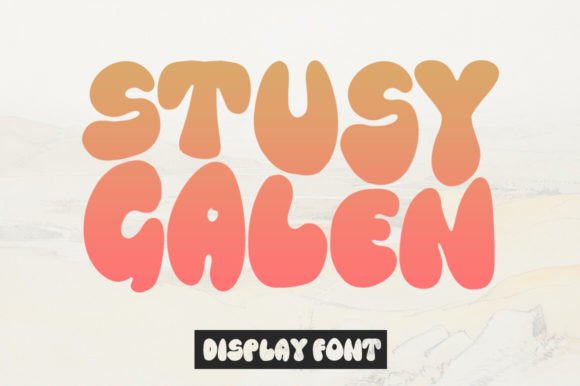
Stusy Galen isn't trying to be everything to everyone, and that's exactly what makes it useful. It's a fun and charming display font that leans into playfulness without tipping into chaos. The letterforms have a hand-drawn quality—slightly irregular, full of character—but they're consistent enough to read clearly at various sizes. That balance matters more than most people realize. A font that's too quirky becomes illegible at small sizes. One that's too rigid loses its emotional impact. Stusy Galen threads that needle with an approachable, original aesthetic that works across a surprising range of applications.
Think about the projects where tone matters as much as clarity. Children's activity sheets. Parent-child workshop materials. School event posters. Clothing tags for a kids' brand. Food packaging that needs to feel friendly rather than corporate. Birthday cards that should make someone grin before they even read the message. These are the kinds of projects where Stusy Galen naturally fits. It embodies a sense of joy and creativity that resonates with both young audiences and the adults who make purchasing decisions for them.
Bringing Personality to Brand Identity and Logo Design
If you're building a brand that targets families, children, or anyone who appreciates a lighthearted visual language, font choice is one of the earliest and most impactful decisions you'll make. Your typeface becomes shorthand for your brand's personality. When someone sees it on a website header, a product label, or a social media post, they instantly form an impression—often before they've processed a single word of copy.
Stusy Galen works well as a primary display typeface for brands in education, children's entertainment, family-oriented services, artisan food products, and creative studios. Imagine it on a bakery logo specializing in custom birthday cakes, or as the headline font for a children's art class. The letterforms communicate approachability and creativity without needing additional explanation. That's the kind of instant recognition that strengthens brand identity over time.
For logo design specifically, the font's distinctive character means you can use it with minimal modification and still end up with something that feels custom. Pair it with a simple icon or a clean sans-serif for taglines, and you've got a logo system that's both memorable and functional across different media.
Practical Applications Across Print and Digital
One of the strengths of a well-designed creative font like this is its adaptability. Here's where Stusy Galen tends to perform best in real-world projects:
- Packaging design for children's snacks, toys, craft kits, or educational products where shelf appeal depends on conveying fun and trustworthiness simultaneously.
- Social media graphics where you need a headline that stops the scroll—think Instagram posts for family bloggers, Pinterest pins for DIY projects, or Facebook ads for kids' clothing lines.
- Invitations and cards for birthdays, baby showers, school events, or holiday celebrations where the typography sets the mood before the details register.
- Posters and flyers for community events, school fundraisers, summer camps, or family-friendly festivals.
- Merchandise like t-shirts, tote bags, stickers, and mugs—particularly for brands or creators who sell to a younger demographic or family audience.
- Website headers and blog graphics where you want to inject personality without compromising the readability of body text set in a complementary serif or sans-serif font.
- Digital products such as printable worksheets, activity books, educational PDFs, and downloadable party kits sold through Etsy or similar platforms.
- Editorial layouts for magazines, newsletters, or zines targeting parents, teachers, or creative hobbyists—especially for pull quotes, section headers, and feature titles.
The common thread across all these applications is emotional resonance. Stusy Galen makes things feel approachable, creative, and human. That's valuable whether you're designing a single birthday card or building out an entire brand system.
Pairing Stusy Galen With Other Fonts
No display font works in isolation. The real magic happens when you pair it thoughtfully with complementary typefaces for body copy and supporting text. Because Stusy Galen has a strong personality, it benefits from being balanced by something cleaner and more neutral.
A straightforward sans-serif like Open Sans, Lato, or Montserrat works beautifully for body text underneath Stusy Galen headlines. The contrast creates visual hierarchy without competing for attention. If your project calls for something with a bit more warmth in the body copy, a humanist sans-serif like Nunito or a friendly serif like Merriweather can bridge the gap between playful headers and readable paragraphs.
The key principle is simple: let Stusy Galen own the spotlight in headlines, logos, and display contexts, then give supporting text room to breathe with a calmer typeface. This approach also improves overall readability, which matters enormously for longer-form content like blog posts, product descriptions, and educational materials.
Readability and Licensing Considerations
A few practical notes worth keeping in mind before you commit to any premium font for a project:
Test at multiple sizes. Display fonts are designed for larger text, so always check how Stusy Galen looks at the actual size you'll be using. It shines at headline and subheadline sizes, but for anything under 14pt, you'll want to switch to your paired body font. This isn't a limitation—it's just how display typefaces work.
Check the included styles. Some creative fonts come with alternates, ligatures, or stylistic sets that give you more flexibility. Take a few minutes to explore what's included. You might find alternate letterforms that better suit a specific project or solve a spacing issue you didn't anticipate.
Review the license carefully. If you're using Stusy Galen for commercial work—client projects, products for sale, marketing materials—make sure the font license covers that use. Most premium fonts offer both personal and commercial licenses, and the distinction matters. A small upfront investment in the right license protects you legally and ensures the designer who created the font is fairly compensated.
Consider your full design system. Before finalizing any font choice, think about how it fits with your existing brand assets. Does it complement your color palette? Does it work with your photography style? Does it support the emotional tone you're building across all touchpoints? A font that feels perfect in isolation might clash with your broader visual identity if you haven't considered these connections.
Making Typography Work for Your Audience
At the end of the day, font selection is really about communication. You're choosing a visual voice that speaks to your specific audience before they engage with your content on a deeper level. For projects aimed at children, parents, educators, or anyone who values creativity and warmth, Stusy Galen offers a distinctive voice that's hard to replicate with more conventional typefaces.
The best typography decisions come from understanding your audience and your goals, then finding tools that support both. If your project needs to feel joyful, original, and genuinely engaging—without looking amateurish or generic—this display font deserves a spot in your design toolkit. Pair it wisely, use it intentionally, and let it do what it does best: make people feel something good the moment they see your work.